No Professional References Yet? Here's What to Do Before Someone Asks.
There's a specific kind of panic that sets in when an application asks for two professional references and you realize, mid-scroll, that you're not sure who you'd actually list.
Maybe you're early in your career. Maybe you're switching industries and your last ten years don't obviously connect to the job you want now. Maybe you took time away and the people who used to know your work have moved on, or you've lost touch. Whatever the reason, the instinct is the same: I don't have anyone.
You almost certainly do. The problem usually isn't a lack of people — it's a misunderstanding of what a reference actually is.
A reference was never about tenure
Somewhere along the way, "professional reference" got quietly redefined to mean someone with a senior title who has known me a long time. That's not the standard, and it never was.
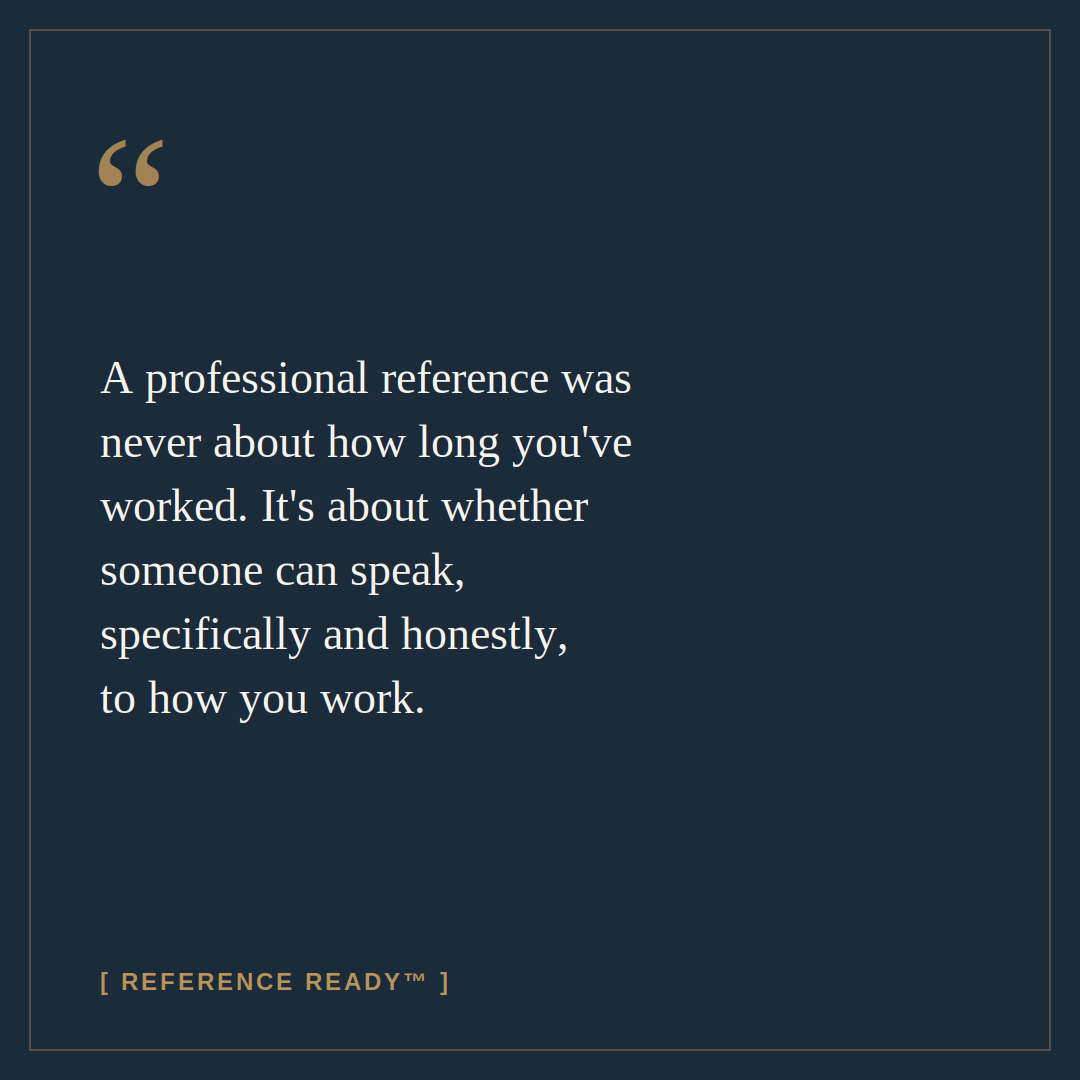
A reference is simply someone who can speak specifically and honestly to how you work. That's it. It doesn't require a decade of history or a job title with "Director" in it. It requires that the person actually watched you do something — and can talk about it in a way that isn't vague.
Which means your list is probably bigger than you think:
A professor or instructor who supervised a real project, not just graded your work
A volunteer coordinator who saw you show up, solve problems, and follow through
A team lead from a part-time or contract role, even a short one
A client or customer you worked with directly, if the relationship was substantial
A colleague — not necessarily your manager — who worked closely enough to speak to your judgment
None of these people need to outrank you. They need to know something true and specific about how you operate.
The quiet mistake most people make
Here's where it goes wrong for a lot of early-career candidates: they wait until an employer asks, then send a rushed message to whoever comes to mind first — "Hey, would you mind being a reference for me?" — with no context, no reminder of what you actually did together, and no idea what that person is going to say when the phone rings.
That's not a references strategy. That's hoping for the best.
The person on the other end of that call is trying to answer a handful of very practical questions: Can I trust what this candidate told me? What are they like under pressure? Did they actually do what their resume says? A reference who's caught off guard, working from a foggy memory, isn't going to answer those questions well — not because they don't think highly of you, but because nobody prepared them to.
What to do instead
Before you list anyone, have a short, direct conversation with them:
Remind them of the specifics. Don't assume they remember the details the way you do. Refresh them on the project, the timeline, the part you're proudest of.
Tell them what you're going for. A reference who understands the role you're applying to can speak to your fit in a way a generic "she was great to work with" never will.
Ask, don't assume. A simple "would you feel comfortable speaking to my work if an employer called?" gives them room to say yes with confidence — or flag a concern you'd rather know about now.
Say thank you, and follow up. Let them know when to expect a call, and close the loop afterward. People remember being treated like this matters.
Done well, this isn't a favour you're asking for. It's a professional relationship you're maintaining — one that will keep being useful long after this particular application.
You don't have to figure this out the first time it's asked of you
If you're building your reference list from scratch — or rebuilding it after time away, a career change, or simply never having done this deliberately — that's exactly what Reference Ready™ Career Foundation is for. We help you identify who genuinely belongs on your list, prepare them properly, and walk into your next application knowing your references will say something real.
[ Book Career Foundation — $149 ]
Prefer to get occasional insight instead? Clarity News is our newsletter on reputation, references, and career positioning — sign up on the homepage.